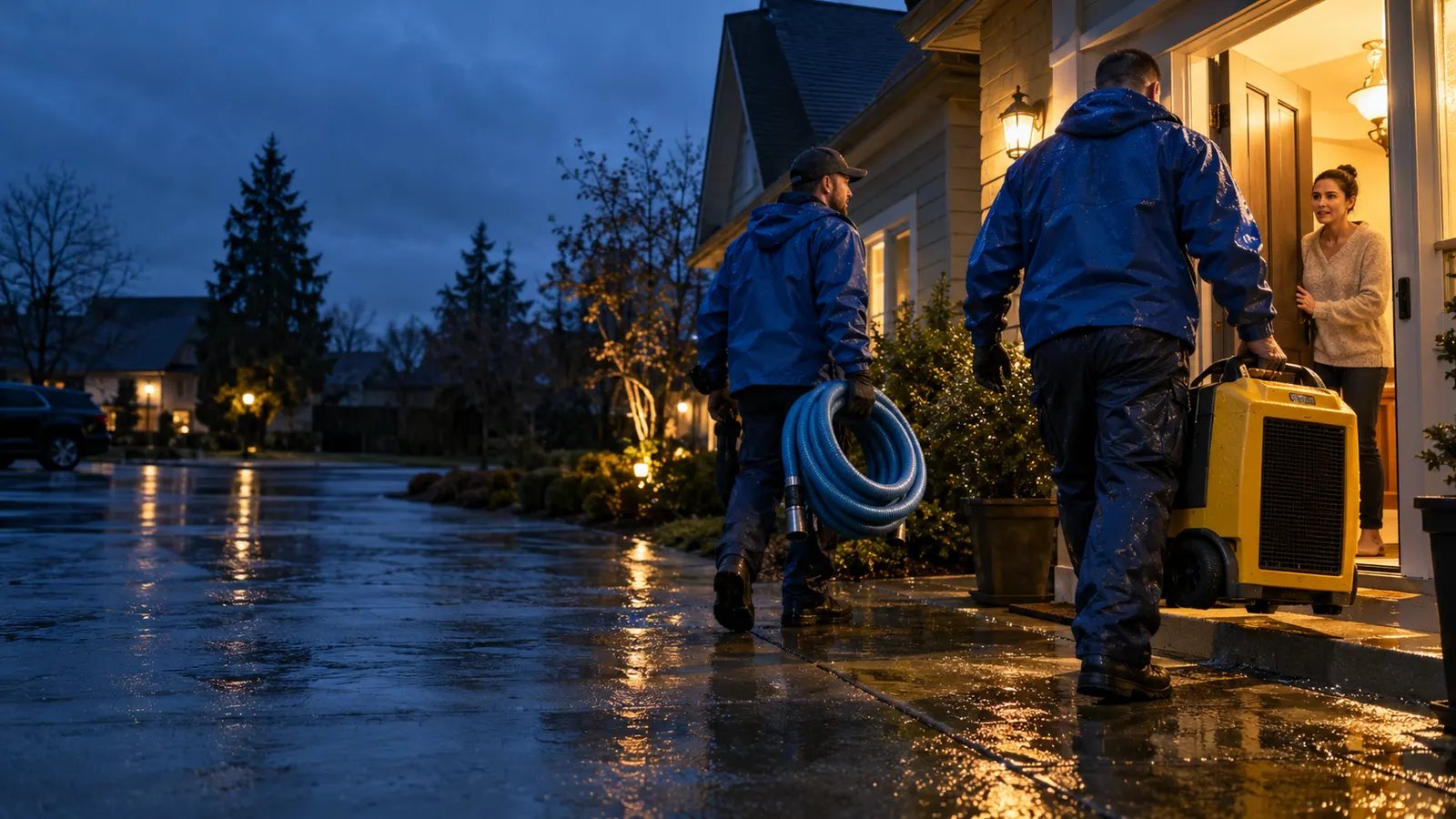
A Restoration Plan That Follows the Damage
The first visible stain is a starting point, not the boundary of the job. Water can follow a wall plate, cross beneath a doorway, or collect under cabinets while the next room looks unaffected. We map nearby materials before agreeing on where removal and drying should stop.
Assess rooms and building layers
We photograph the loss and check floor edges, wall bases, adjoining rooms, and accessible cavities. Moisture meters help distinguish a surface mark from a wet material that still needs attention.
Remove water and unsuitable materials
Extraction reduces standing water. We then identify saturated or contaminated materials that cannot remain, explaining which openings provide access to the structure behind them.
Dry before closing the structure
Airflow and dehumidification support drying while repeat readings show progress. Repair decisions follow the condition of the remaining framing and subfloor, rather than a date chosen at the start.
What Can Stay and What May Need Removal
Materials assessed for drying
Sound framing, some subfloors, and accessible hard surfaces may remain when their condition and contamination level allow it. The crew checks how moisture can escape, whether layers block airflow, and whether the material has begun to deform. Saving a structure requires more than drying its exposed face.
Materials assessed for replacement
Soaked insulation, weakened gypsum board, carpet pad, and swollen composite trim may require removal. Sewage or outside floodwater changes these decisions because porous materials can hold contaminants. We describe the removal boundary and record the reason for it before the damaged area disappears behind repairs.
Where Bixby Homes Hold Hidden Moisture
A slab foundation can hold moisture under carpet pad and along the bottom of drywall. In Arkansas River bottomland, an existing ground-moisture problem can complicate a new indoor loss. We ask whether dampness appeared before the incident so that ongoing slab moisture is not mistaken for the remaining effects of one spill.
Pier-and-beam homes need a different check: joists, the underside of the subfloor, and water beneath the house. Above either foundation, attic supply lines and summer HVAC condensate overflows can soak insulation before staining a ceiling. Spring runoff and winter freezes introduce different water sources and different removal decisions.
Newer tightly sealed homes can retain the moisture released during drying. Equipment placement, room separation, and the building's ventilation conditions all affect the plan. We explain those conditions so opening windows or moving equipment does not unintentionally work against the drying setup.
Connecting Drying Work With Repairs
Restoration is easier to understand when the repair scope follows the openings made during mitigation. A wall opened to remove wet insulation may also need replacement drywall, trim, and finish work. We record those locations and discuss how the repair will meet the remaining surfaces.
Flooring presents another boundary. Water can reach underneath a continuous floor beyond the visibly wet boards. Before replacement materials cover that area, we check the exposed substrate and discuss transitions, adjacent rooms, and any damaged cabinet bases. A new finish should not conceal an unresolved moisture condition.
- Keep the removal photos together with the repair scope.
- Identify any source repair that must happen before rebuilding.
- Review drying records for areas that will become inaccessible.
- Discuss affected finishes and material boundaries before installation.
Records for an Adjuster Reviewing the Loss
The condition of a wet room changes as soon as extraction starts. We take damage photos, record moisture readings, and maintain drying logs so the record explains both the original condition and the work that followed. Where materials are removed, the notes identify what was affected and why the opening was needed.
We work with the adjuster on questions about those observations and the restoration scope. Your carrier decides coverage and claim approval. Tell us if you already have a claim number or instructions from the insurer, and keep your own photos of the first conditions you observed.
Questions About Full Water Damage Restoration
Is water mitigation the same as finished restoration?
Mitigation addresses the water and limits further material damage through extraction, removal, and drying. Finished restoration includes rebuilding affected surfaces afterward. We distinguish those stages in the work discussion so you understand why a room may be dry but still need drywall, trim, or floor repairs.
Can one loss involve both upstairs and downstairs rooms?
Yes. Water from an attic or upper room can travel through insulation and framing into a lower ceiling, then reach the floor below. We check the connected route where accessible. A small stain upstairs does not show the size of the loss in the room underneath.
What information helps connect cleanup records to repair work?
Room names, photographs of opened structures, and the locations of removed finishes help establish the repair limits. Moisture readings document the condition of remaining materials. Keep source-repair records separately so your adjuster can distinguish the failed component from the resulting damage to the building.
Can belongings remain in a room while equipment runs?
That depends on access, contamination, and whether furnishings block the drying area. We discuss moving or protecting items before equipment is placed. A clear route to wet wall edges and floor sections helps us measure the same locations again without disturbing your belongings repeatedly.