
Emergency Water Extraction for Homes and Businesses
Standing water in a Bixby home or business spreads across floors and into the materials along their edges. Emergency water extraction removes that bulk water so the crew can assess the carpet pad, lower walls, and floor layers underneath. It is the beginning of cleanup, rather than proof that a room is dry.
Call Bixby Restoration Champ when water is pooling in a room or several connected spaces. Describe the source, whether it is still flowing, and any electrical or access concerns. Emergency water damage response is available 24/7; the extraction plan depends on conditions at the property.
Call (918) 675-5611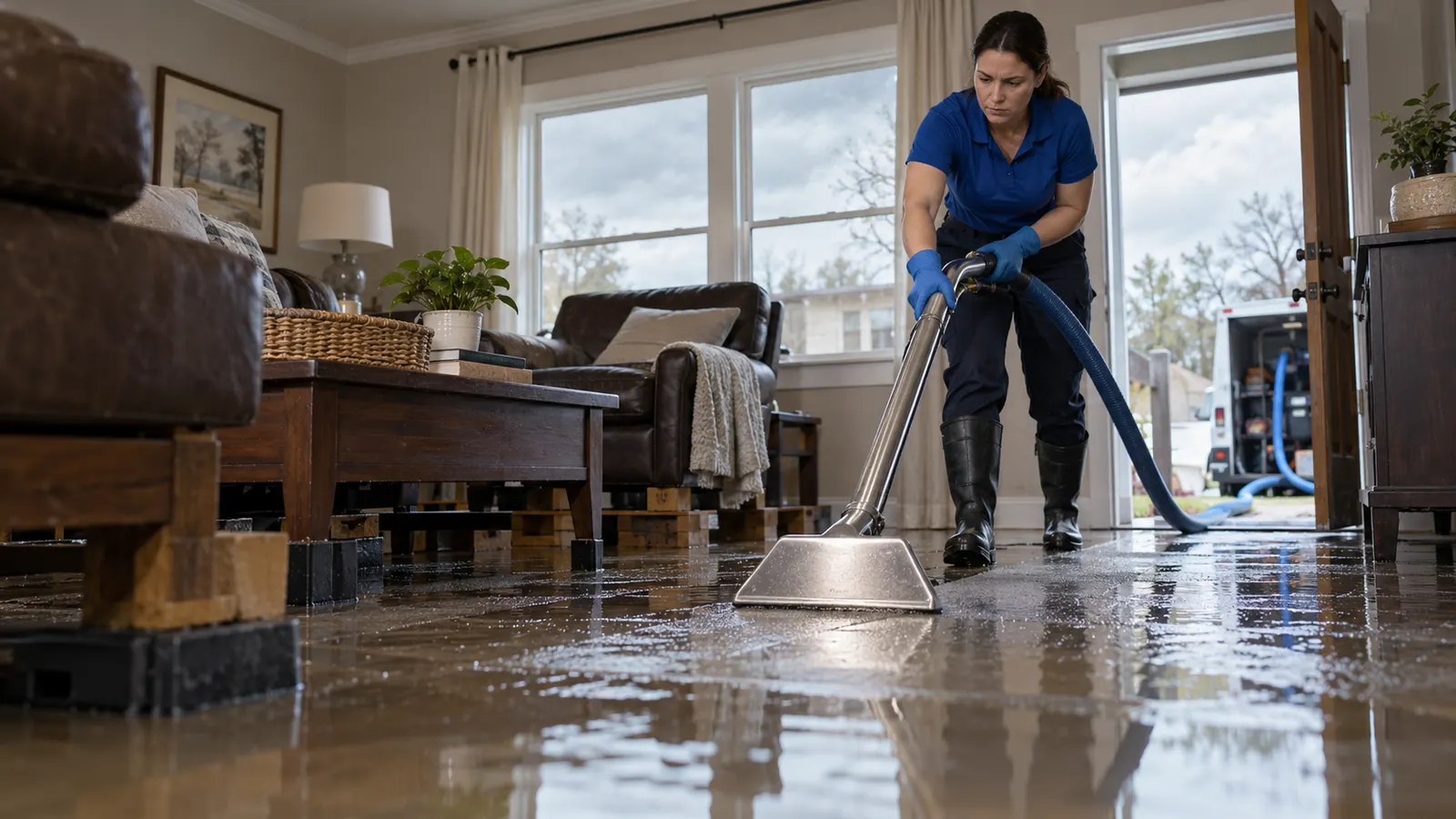
Information to Gather Before Extraction
You do not need to measure the loss before calling. A few observations from a dry, accessible location help us understand which equipment and work areas may be involved. Do not cross standing water to collect photographs or reach belongings.
- Identify the rooms where water is visible and any doorway it has crossed.
- Say whether the water came from a supply line, appliance, drain, or outside runoff.
- Mention water near outlets, appliances, electrical panels, or sagging ceilings.
- Tell us whether the source has stopped and whether anyone has isolated affected rooms.
- Note access restrictions, stairs, pets, and an available route from the entrance to the wet area.
In a slab home, a shallow layer of water may run a long way under a continuous floor. In a pier-and-beam house, some water may escape through floor openings and collect beneath the building. Both situations need checks beyond the visible puddle.
Removing Bulk Water From Different Surfaces
| Affected surface | Extraction approach | What still needs checking |
|---|---|---|
| Hard floor with standing water | Use equipment suited to the water depth, access, and surface condition | Seams, floor edges, transitions, and water beneath finish layers |
| Saturated carpet | Extract from the carpet surface while assessing backing and pad | Pad saturation, subfloor condition, and contamination |
| Water against lower walls | Remove pooled water and check the wall-floor junction | Baseboards, bottom plates, insulation, and adjacent cavities |
We choose tools for the conditions instead of treating every room like an open concrete floor. Furnishings, fragile finishes, and water beneath fixed cabinets change how the crew gains access. Equipment also needs an appropriate power arrangement and a route that does not carry debris through unaffected rooms.
The Checks That Follow Water Removal
As the floor becomes accessible, we check materials that may still be holding water. Carpet pad can remain saturated after extraction from the fibers. A floating floor can conceal water in its underlayment. Baseboards may hide a wet drywall edge even when the room no longer has a visible puddle.
The crew records the initial moisture pattern and discusses openings or material removal where needed. Air movers and dehumidifiers may then be required to dry the remaining structure. Extraction and structural drying serve different purposes, so a clear floor alone does not show that the drying work is complete.
- Inspect adjoining rooms reached through shared flooring.
- Check accessible cabinet bases and floor transitions.
- Separate material damage from the amount of surface water.
- Record readings before equipment changes the indoor conditions.
Common Extraction Calls Around Bixby
Winter attic-line failures can release water above several rooms before the water reaches an occupied floor. During humid Oklahoma summers, a condensate overflow may start in a closet and soak nearby carpet. We ask where the water first appeared because its route helps identify the areas to inspect after extraction.
Spring storms can bring muddy outside runoff through a ground-level doorway. That water needs a contamination assessment before the crew decides which porous materials can remain. A drain backup also requires a different cleanup plan from a recent clean-water spill; removing water does not remove the need for controlled handling.
Access, Furniture, and the Extraction Route
A clear work route helps protect areas outside the loss. We discuss which furnishings can be moved, which need temporary protection, and whether the wet room can be separated from normal household traffic. Heavy or unstable objects should not be moved simply to uncover more water.
Where several rooms connect, the crew works through the affected footprint while checking for water trapped beyond the first room. We explain when a material is being removed for access and when it is unsuitable to retain. Those are different reasons, and the record should make the distinction understandable.
Documenting the Initial Water Conditions
Before and during extraction, we photograph the affected rooms and document accessible moisture readings. Drying logs continue the record if dehumidification or airflow equipment is needed afterward. These details can show why a room required more than surface cleaning even when the standing water is no longer visible.
We work with your adjuster to explain observed damage and the extraction scope. Coverage and claim approval remain with the insurer. If you photographed the water before anyone began cleanup, keep those images with the date, room location, and any source-repair paperwork.
Standing Water Removal Questions
Can extraction remove water trapped beneath a floating floor?
Surface extraction may not reach water beneath an installed finish. We inspect transitions and accessible edges, then discuss whether sections need lifting or removal. The decision depends on the flooring structure and its condition. Running a wand over the visible surface does not dry a concealed underlayment.
Does an extraction wand sanitize sewage-contaminated carpet?
No. Water removal is separate from contamination cleanup. Sewage-affected porous flooring generally requires removal under a controlled plan rather than ordinary carpet extraction and reuse. Tell us about a drain or toilet backup when you call so the work is not approached as a clean-water spill.
Why are readings taken after the puddle is gone?
The readings check moisture left in materials rather than water sitting on top. They help identify wet pad, framing, or drywall that still needs drying or removal. They also establish a starting record for follow-up checks as equipment changes the moisture conditions in the room.
Can water extraction cover multiple connected rooms?
Yes. We assess the connected wet footprint and discuss equipment access through each room. Water can cross beneath a doorway before it is visible at the next wall. Tell us which areas share the same flooring so the crew can check that route during the assessment.
Call About Standing Water in Your Property
Tell us where water has collected, whether the source is controlled, and whether the wet area can be reached without crossing an electrical hazard.
Call (918) 675-5611