
Flood & storm water cleanup
Sand Springs hillsides can send muddy runoff toward low entrances and ground-floor rooms.
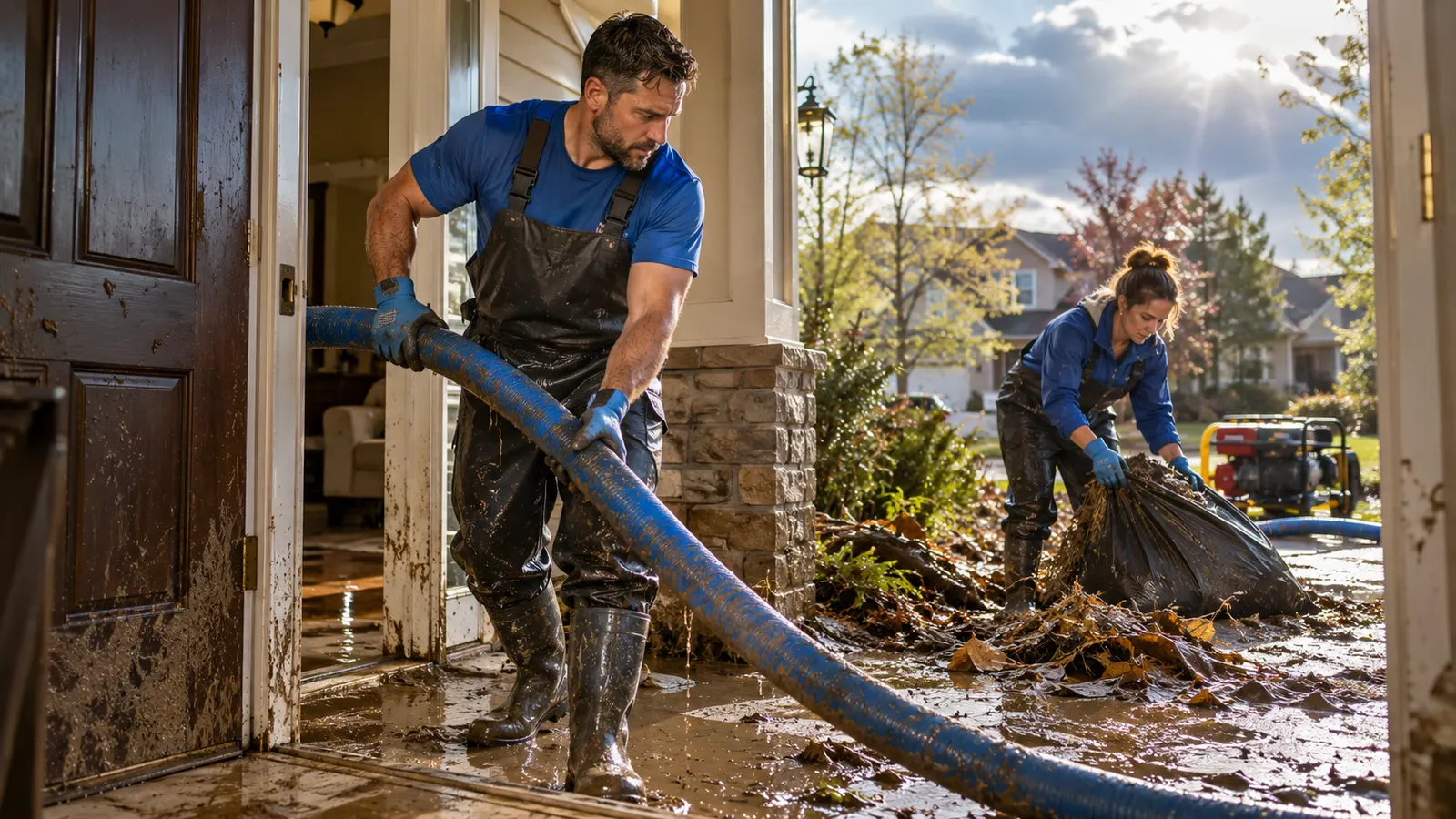
Hillside runoff in Sand Springs can carry muddy water into lower homes and soak pad and lower drywall. We remove water and damaged porous materials, clean the exposed surfaces, and dry rooms after storm entry or frozen garage and utility-room lines.
24/7 emergency responseWater damage help, day or night
Measured dryingMoisture meters & drying logs
Cleanup through repairsExtraction, drying & rebuilding
Claim documentationPhotos & records for your adjuster
Sand Springs hillsides can send muddy runoff toward low entrances and ground-floor rooms.
Sand Springs outside water needs stronger handling when sewage or other gross contamination is present.
Water entering a lower Sand Springs room can collect beneath pad and along wall bases.
Sand Springs framing and floor edges need moisture checks after mud and unsuitable layers are removed.
Runoff can pass beneath Sand Springs carpet and floor finishes beyond the first wet doorway.
A hillside property near Case Community Park can receive storm runoff at a low entrance. Muddy water reaches carpet and the bottom of drywall before it drains away. We photograph the entry marks, remove water, and assess pad and lower wall layers for removal before cleaning and drying the floor and framing that remain.
A Sand Springs hillside home can have outside water move from a utility room into a hallway and bedroom. Sediment stays near the door while water travels farther under flooring. We check each transition, lift accessible edges, remove unsuitable wet layers, and track the route so the dry-looking end of the hall is not overlooked.
During an Arctic front, a garage line in a wind-exposed Sand Springs home can freeze and split. Water runs into a finished room on the other side of the wall. A plumber repairs the line while we inspect the wall base, extract water from the adjoining floor, and check wet insulation and framing before the room is closed.
At a property around Charles Page Boulevard, stormwater may leave mud in a lower room and debris at a floor edge. A surface wipe misses residue beneath pad or trim. We separate the work route, remove unsuitable porous material, clean reachable hard surfaces, and then plan drying for the damp wall and floor areas.
Spring storms can concentrate water at the lower side of a Sand Springs hillside lot. Tell us where runoff entered and whether muddy water reached more than one room. The cleaning plan follows that route, including pad and lower drywall that may need removal before drying equipment can reach the remaining surfaces.
A lower Sand Springs room may remain damp after a runoff event even when the open floor looks clean. Summer humidity makes it important to check beneath pad and along wall bases. We measure reachable materials and ask whether new rain is still sending water toward the same entry before repair finishes go back.
Cold wind on Sand Springs hillsides can leave garage and utility-room lines vulnerable during Arctic fronts. An indoor line release differs from muddy runoff, so tell us which event occurred. We check the floor on both sides of a wet wall and record where the frozen-line water reached absorbent room finishes.
Ground-level runoff in Sand Springs is often Category 2 or Category 3 water, depending on what it passed through. We assess contamination before deciding what can remain. Pad, affected carpeting, lower drywall, and wet insulation may need removal because drying the surface will not remove mud or contamination held inside them.
The path from a Sand Springs entry matters even when most mud stops at the door. Water can continue under the finish and wet a wall farther into the house. We check those floor transitions, record what we find, and explain where material needs lifting or removal so cleaning and drying can reach beneath it.
A slab-floor room in a lower Sand Springs home may need pad and trim removed, while a raised-floor portion can also have wet wood below it. Tell us if the house includes both types of floor. We assess each affected section so work at an easy-to-see slab edge does not leave the raised-floor area unchecked.
For a Sand Springs hillside property, indoor cleanup and the outside entry route need attention together. We record where runoff crossed the doorway or wall edge while the appropriate contractor addresses grading or drainage. We keep damage photos, moisture readings, and drying logs and discuss the cleanup work with the adjuster.
Sand Springs is about 25 miles from our office at 14924 S Grant St, Bixby, OK 74008. Tell us which side of the hillside property received runoff, where water entered, and whether the wet area is on a slab or above a crawlspace.
For a lower Sand Springs room, photos of the first water mark and mud at the threshold can help show how the storm affected the house. Keep pictures from before cleanup with the later drying record. They help explain why work extends beyond the doorway even when the visible debris was concentrated there.
Sand Springs runoff cleanup can involve more removal and cleaning than an indoor supply spill. The amount of mud, the materials it reached, and the route through a lower home all affect the work.
| Cost factor | Why it matters in Sand Springs homes | Raises or lowers cost |
|---|---|---|
| Category 2–3 runoff and porous materials | Sand Springs hillside water can carry contaminants into pad and lower drywall. | More unsuitable material to remove and dispose of raises cost compared with a clean, reachable surface. |
| Mud and debris left indoors | Runoff in lower Sand Springs rooms may leave residue along floors, trim, and thresholds. | Heavy sediment and more cleaning steps increase labor; little debris reduces that part of the job. |
| Distance water moved from the entry | A Sand Springs doorway can admit water that travels beneath finishes into other rooms. | More wet rooms and hidden floor areas add removal and drying; a limited footprint needs less work. |
An exact cost for a Sand Springs hillside runoff or utility-room cleanup needs an on-site assessment. Insurance coverage depends on the policy and whether the Sand Springs damage came from floodwater, a frozen line, or another cause.
Try the cost calculator for your Sand Springs home’s wet rooms.
Muddy water entering a lower Sand Springs home may need contaminated pad and drywall removed before drying. A recent indoor line spill has a different source. We check what each event wet and explain the cleaning and material removal needed rather than treating the two jobs alike.
Pad can hold water beneath carpet beyond the low doorway of a Sand Springs hillside house. Mud at the threshold may be only part of the wet area. We inspect accessible floor edges and explain where pad removal is needed to reach the floor and clean it.
Pumping removes water already inside the lower room of a Sand Springs hillside house. The hillside drainage or entry problem still needs attention from the appropriate contractor. We document the wet floors and doorway marks so that outside work can be planned alongside cleaning and drying, before new finishes cover the area.
Tell us which garage or utility-room line was repaired and whether water reached a finished room beside it. Wind-exposed Sand Springs homes can have wet wall bases and flooring on both sides of that wall. We check those surfaces as well as the open garage floor.
Tell us where hillside water entered your Sand Springs property, how far it spread, and whether mud remains indoors. We will explain removal, cleaning, and drying for the affected rooms.
Call (918) 675-5611